




106 – CL2030 – METAPOLIS ARCHITECTS


Main authors: Mircea Munteanu, Cristian Panaite
Architectural collaborators: Metapolis Architects: Diana Sava, Mihai Șom, Laura Dinu-Constantin, Ștefan Mirică, Ioana Afloarei, David Mutnean, Bogdan Ilie, Tran Hoang;
Specialty collaborators: prof. dr. biolog Ioana Mihaela Georgescu
LOT 1 – 2nd PRIZE
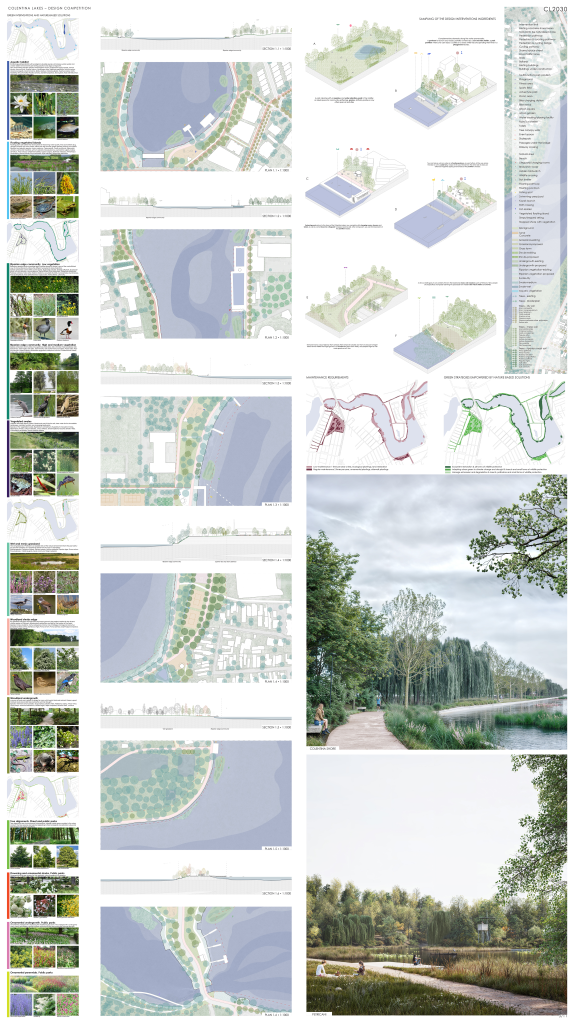
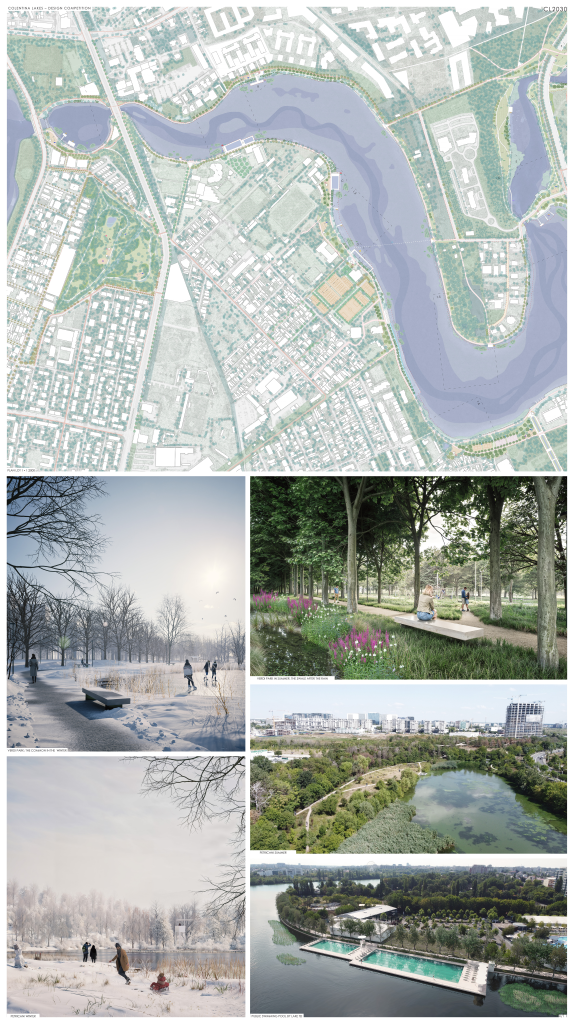
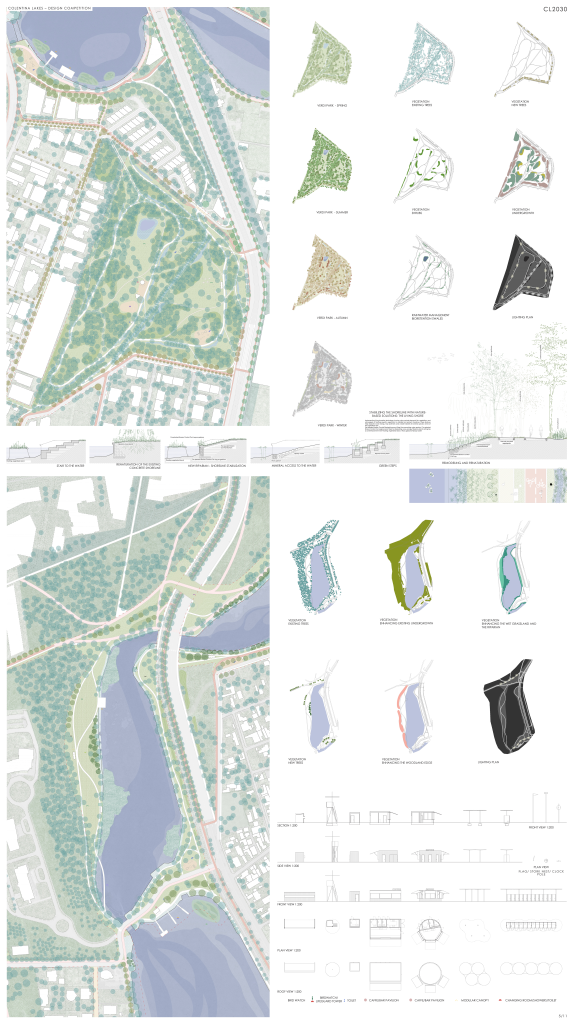
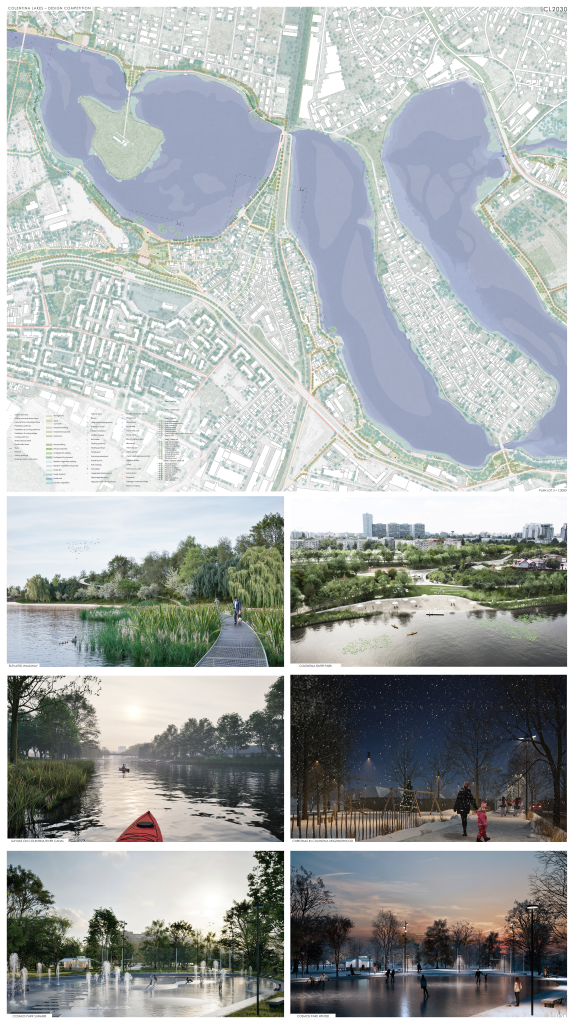
“ This is a strong and coherent project which is sensitive to the surrounding environment. The proposal poses a series of questions which the team aimed to address in their proposal with a focus on nodes, portals and bridges. The jury appreciated that this scheme used nature-based solutions in the landscape approach and considered a bigger area of intervention in the conceptual approach. The team sought to preserve local memory by re-using and re-animating existing structures and elements such as the pools. The overall quality of the graphics and images were professional, and the jury appreciated the simplicity and thoughtfulness of the interventions. Although this was a competent scheme, the jury felt that the scheme presented, and the conceptual approach taken was not as strong as the winner.” – appreciation of the Jury
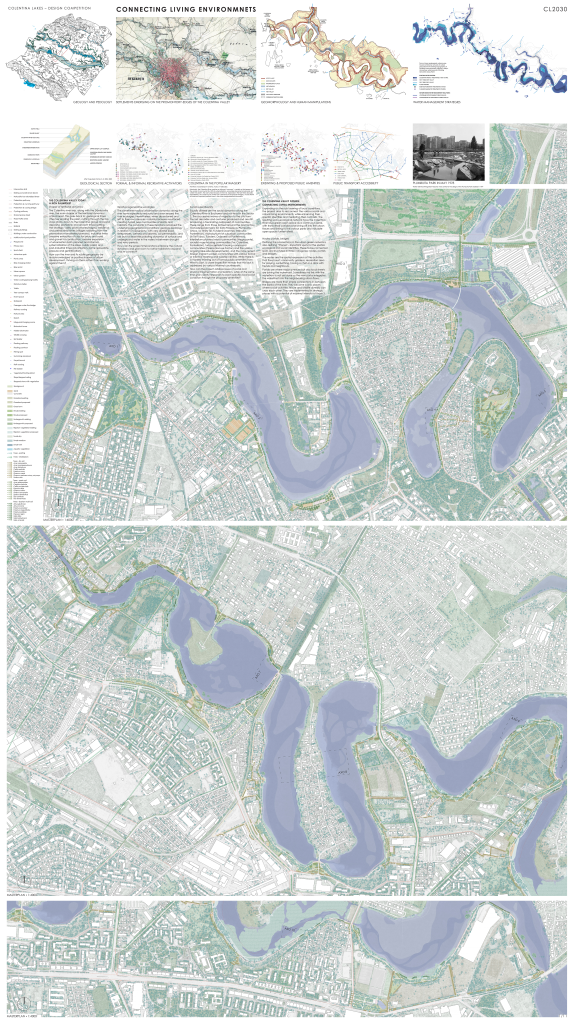
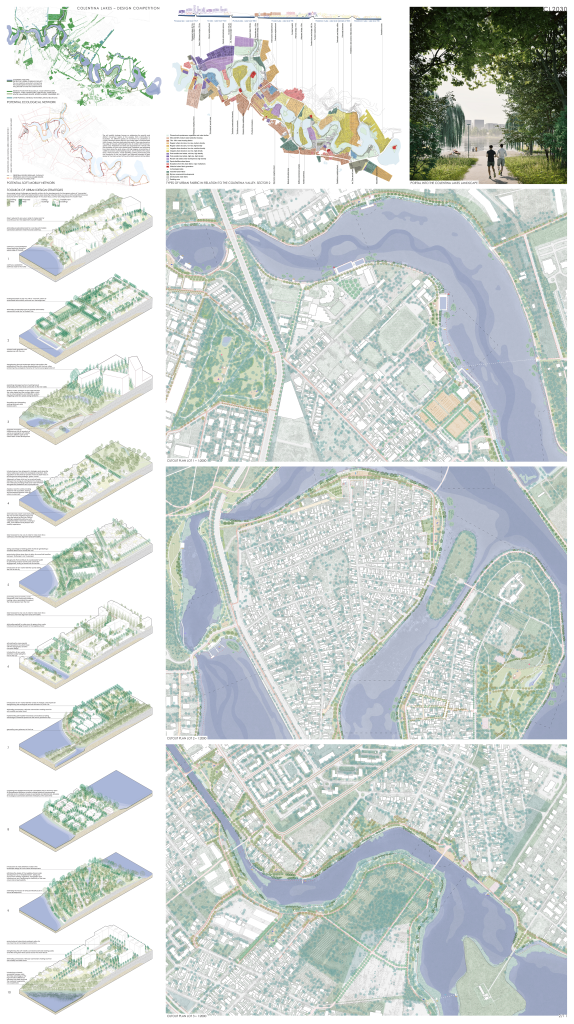
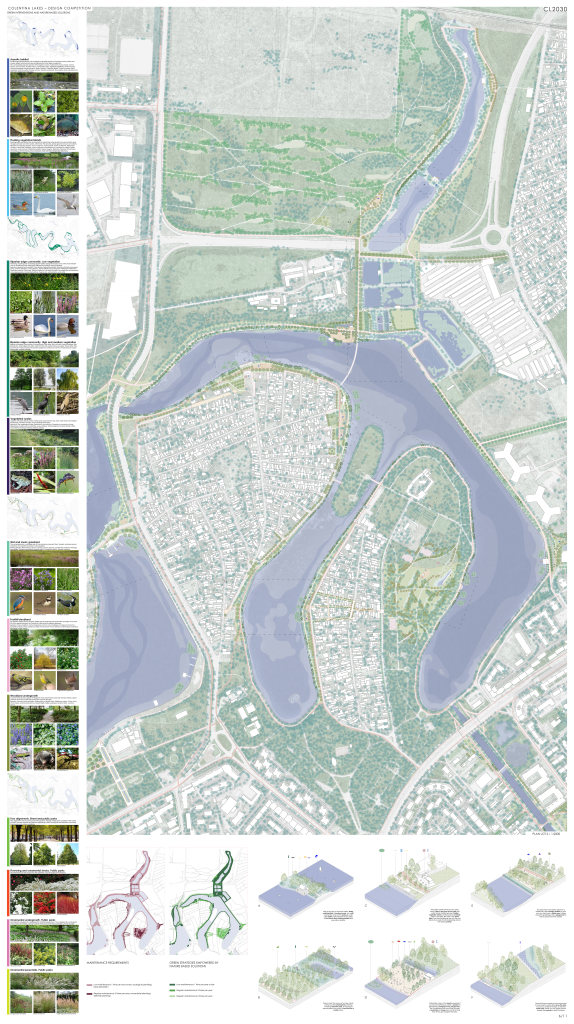
THE COLLENTINA VALLEY TODAY: A RICH PALIMPSEST
Shaper of territorial dynamics
The Colentina river was, along with the Dâmbovița river, the main shaper of the territorial dynamics of Bucharest. This goes back to: geological times (the river eroding the plain, cutting through the top clays strata, down to the Colentina gravel and sand deposits), prehistoric and ancient times (settling the strategic valley promontories/edges), medieval and preindustrial times (villages radiating from the promontory-monasteries/domains), industrial times (massive extraction of clay for bricks and sand and gravel for construction, massive expansion of urbanisation both planned and informal, systematization of the lakes, public parks) and post-industrial times (privatisation, prime real-estate pressure and gentrification).
How can the river and its subtle geography be re-acknowledged as positive shapers of urban development, thriving on them rather than working against them?
Iterative regenerative ecologies
The sometimes-radical urbanisation dynamics along the river have repeatedly reduced and even erased the river ecologies. Nevertheless, when abandoned and left to their own devices, natural processes resurfaced, creating hybrid new communities of plants and habitats. The constants in these iterations remained the underlying geographical conditions: geology-pedology in relation to topography, with very diverse slope steepnesses, wetness and dryness, soil permeability, and last but not least the pulsating dynamics of surface and underground water in the valley in-between drought and rainy periods.
How can the project interventions embrace the natural dynamics and give room to native habitats to expand and re-connect?
Social superdiversity
Equally diverse are the social dynamics along the Colentina River in Bucharest and not least in the Sector 2. The successive waves of migration to the city from the last decades and centuries produced and are still producing a fascinating palimpsest of communities. These range from those formed around the promontory-monasteries/domains (St. Sofia Floreasca, Plumbuita, Ghica, St. Trinity Tei, Fundenii Doamnei, Mărcuța, Pantelimon), mahala/slum-ish suburban communities (in Tei-Toboc, Fundeni, Dobroești or Pantelimon), interbellum planned micro-communities (Negroponte), socialist mass-housing communities (Tei, Colentina, Pantelimon), turbo-capitalist housing compound communities (Pipera-Glucose Factory and the various ongoing lake-side developments), and the more recent foreign migrant-workers communities with various formal or informal meeting and worship centres. While there is a marked thinning out of formal public amenities from West to East, a closer inspection reveals that this lack is addressed by various informal counterparts.
How can the project address issues of social and physical fragmentation and isolation, while at the same time give careful responses to each specific local social condition through the proposed amenities?
THE COLENTINA VALLEY FUTURES: CONNECTING LIVING ENVIRONMENTS
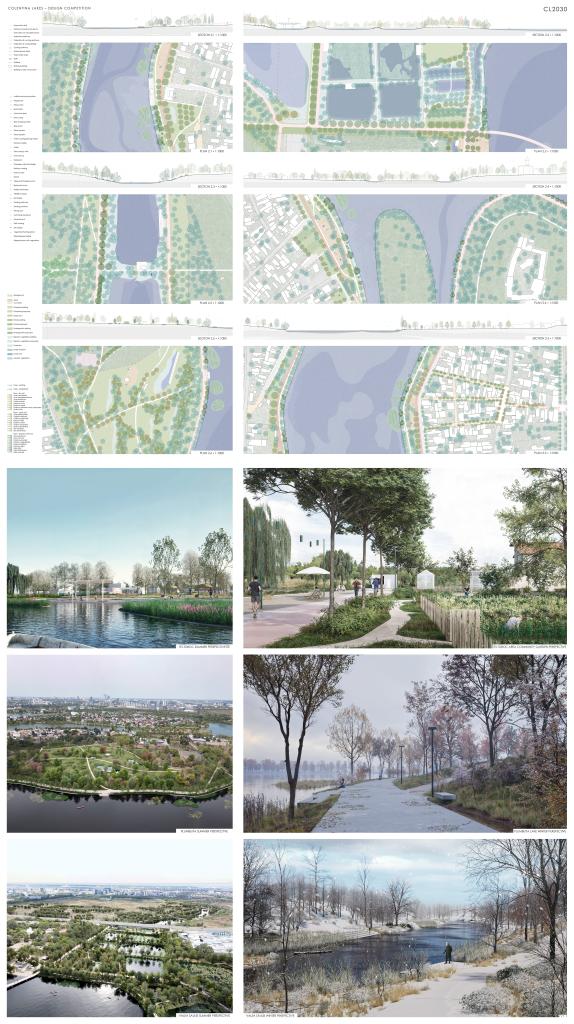
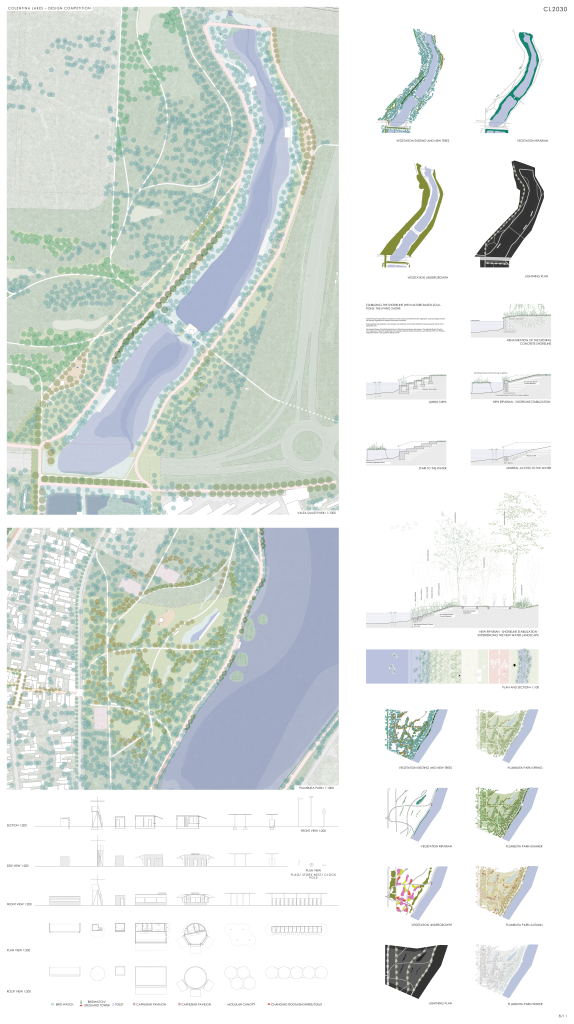
Expanding on the rich layering of local conditions, the project aims to re/connect the various social and natural living environments, while enhancing their specific identities and mediating their contrasts. The resulting socio-ecological network have the Colentina River blue-green open space as a continuous spine, with transversal corridors branching off into the urban tissues and linking to the various parks and valuable open spaces further afield.
Nodes, portals, bridges
Defining the connections in the urban green network is also defining “Places” – important spots for the spatial, ecological and social identities. These to-be-connected spots are structured in three categories: nodes, portals and bridges.
The nodes are the spatial expression of the activities that they houst: community gardens, recreation area for playing, sunbathing, having a chat or a drink with friends and neighbours.
Portals are where major avenues but also local streets are joining the waterfront. Sometimes this link with the waterfront is not yet done so the new portal integrates the waterfront into the neighbouring urban flows.
Bridges are more than simple connections in-between the banks of the river. They become iconic places where social activities, leisure and wildlife diversity can cross each other. They are implemented in strategic places with a potential of maximal intensity of those 3.
LOT 2 – MENTION
LOT 3 – 3rd PRIZE
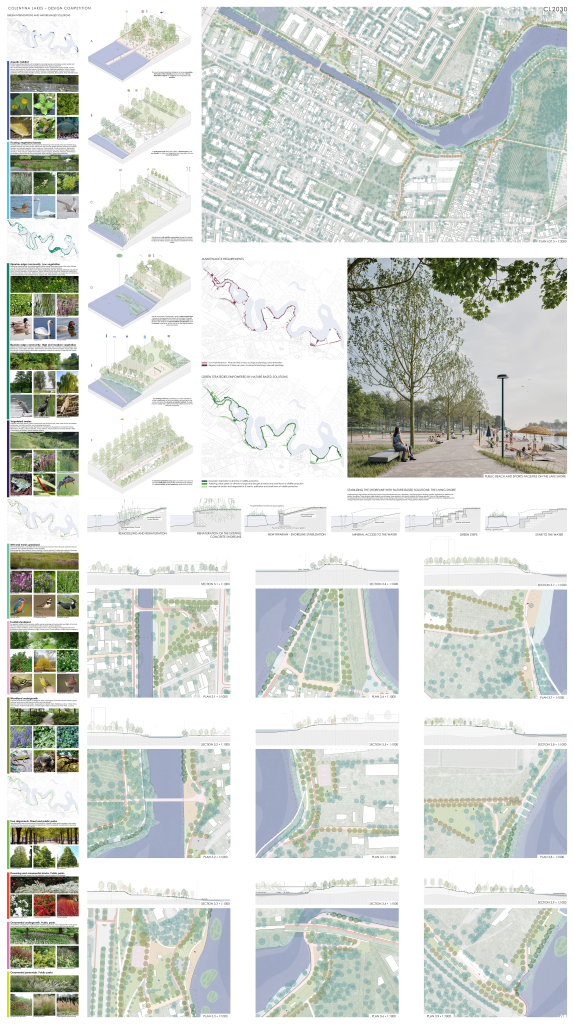
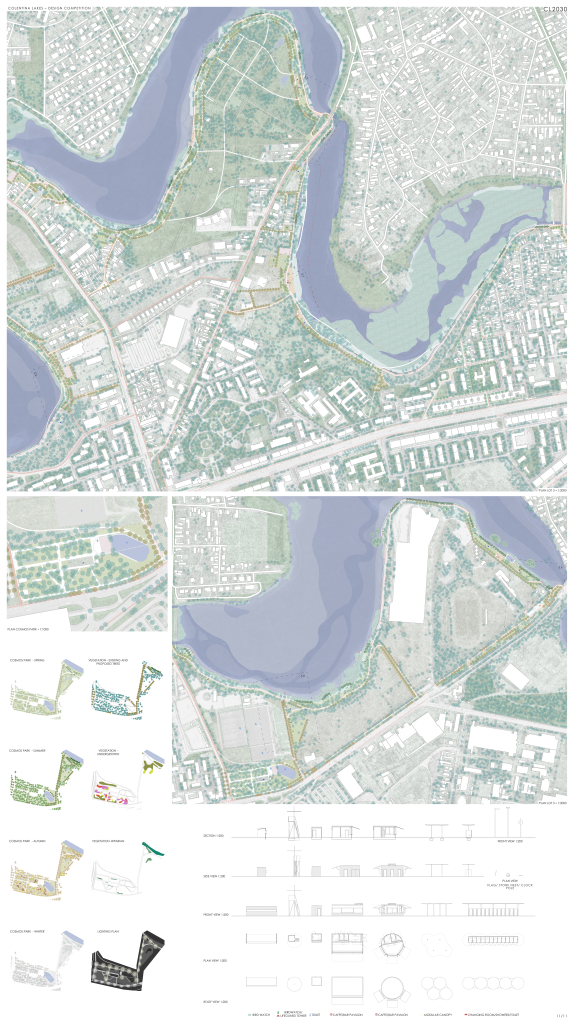
“This project creates an urban beach as an attractor and focal point which connects to the neighbourhoods at a strategic point. The gradual descent into the water was appreciated as this experience is not available in other locations along the river. The team proposed different typologies for the re-naturalising of the shoreline which was appreciated by the jury. The team proposed to re-use some of the existing facilities and added water to Cosmos Park. The design of the architectural and urban furniture was not as strong as in other projects..” – appreciation of the Jury