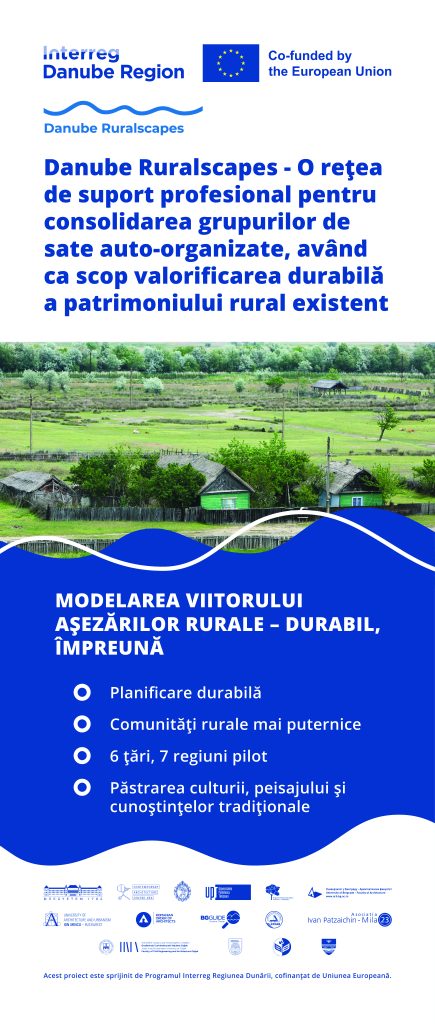





Interreg Danube Ruralscapes
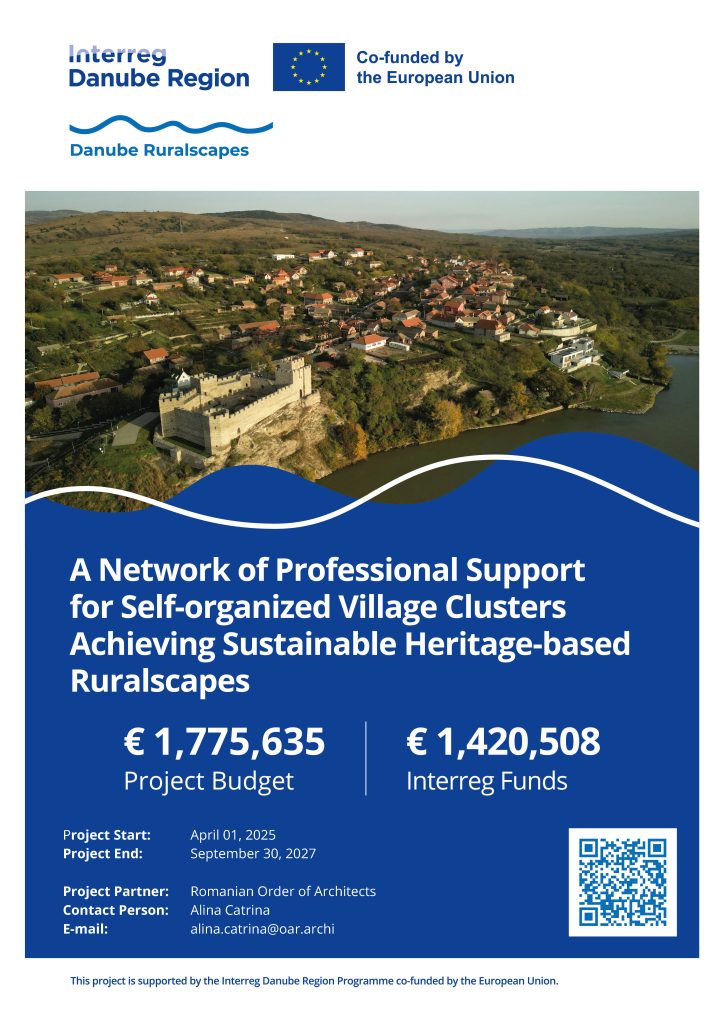
A network of professional support for self-organized village clusters aiming for heritage-based sustainability of rural landscapes

Duration: April 2025 – September 2027
Programme: Interreg Danube Region Programme 2021–2027
Lead Partner: Budapest University of Technology and Economics
Project Acronym: Danube Ruralscapes
About the Project
“Danube Ruralscapes – a Network of Professional Support for Self-organized Village Clusters Achieving Sustainable Heritage-based Ruralscapes” (2025–2027) is a project funded by the Interreg Danube Region Programme and coordinated by the Budapest University of Technology and Economics (HU).
The project aims to empower and give voice to village clusters across the Danube Region through heritage-based, climate-conscious, and community-driven development. It will create tools, strategies, and governance models that preserve local identity while promoting sustainable rural transformation.
The initiative builds upon the legacy of the Interreg DTP DANUrB and DANUrB+ projects, which laid the foundations for transnational cooperation in heritage-based development along the Danube. Danube Ruralscapes takes this further—introducing new tools, a deeper local engagement, and a stronger alignment with the European Union’s green and cultural policy priorities.
Project Objective
To develop a shared model of good practices for rural planning that supports national, regional, and local policies in the Danube Region, specifically targeting small, resource-limited rural communities by strengthening their capacity in sustainable architecture, landscape planning, and heritage preservation.
Key Goals
- Develop Guides for Architectural Identity and Rural Landscape in 7 pilot micro-regions
- Promote bottom-up governance and inclusive decision-making for village clusters
- Establish a Transnational Knowledge Network for policy and practice exchange
- Connect cultural heritage and sustainability in line with the values of the New European Bauhaus
The Role of OAR in the Project
The Romanian Order of Architects (OAR) is a partner in the international project Danube Ruralscapes, funded through the Interreg Danube Region Programme, alongside universities, public institutions, and professional organizations from several European countries.
The project aims to create a shared framework for the sustainable development of rural areas in the Danube Region, by leveraging built heritage, cultural identity, and rural landscapes.
OAR contributes through its expertise in rural architecture and its extensive experience in developing Architectural Guides for Rural Areas. Over the past fifteen years, these guides have provided models of good practice for both new constructions and rehabilitation of existing buildings in harmony with local identity.
Within Danube Ruralscapes, OAR brings this experience into the transnational dialogue, helping define the principles and methodology for future Guides of Rural Architectural Identity across the Danube Region.
By participating in international and regional working meetings, OAR facilitates the exchange of knowledge between professionals, authorities, and local communities, strengthening a cooperation network among architects and related specialists.
Its involvement reflects OAR’s commitment to promoting architectural quality, protecting rural heritage, and integrating sustainability principles into the development of Danube Region communities.
OAR Project Team
- Assoc. Prof. Dr. Arch. Cristian Blidariu – Project Coordinator
- Arch. Alina Catrina – Project Manager
- Veronica Drăgoi – Financial Manager
Geographic Area
Partner countries
- Hungary
- Romania
- Serbia
- Croatia
- Bulgaria
- Ukraine
Main Project Partners
- Budapest University of Technology and Economics | Department of Urban Planning and Design (Hungary) – Lead Partner
- Hungarian Contemporary Architecture Centre (Hungary)
- Pest County Council (Hungary)
- Politehnica University of Timișoara (Romania)
- Regional Development Agency “Braničevo–Podunavlje” Ltd. (Serbia)
- University of Belgrade – Faculty of Architecture (Serbia)
- “Ion Mincu” University of Architecture and Urban Planning (Romania)
- The Romanian Order of Architects (Romania)
- National Tourism Cluster “Bulgarian Guide” (Bulgaria)
- Association of Danube River Municipalities “Danube” (Bulgaria)
- Ivan Patzaichin – Mila 23 Association (Romania)
- Josip Juraj Strossmayer University of Osijek – Faculty of Civil Engineering and Architecture Osijek (Croatia)
- Municipality of Kneževi Vinogradi (Croatia)
- Mehedinți County Council (Romania)
- Izmail State University of Humanities (Ukraine)
Associated Partners
- Municipality of Golubac (Serbia);
- National Institute for Research and Development in Tourism – Bucharest (Romania);
- Pontibus EGTC Ltd. (Hungary);
- Danube Delta National Institute for Research and Development (Romania);
- Association of Architects of Osijek (Croatia);
- Department for Urban Planning, Construction, and Environmental Protection of Osijek-Baranja County (Croatia);
- Municipality of Nikopol (Bulgaria);
- Fantast Kneževi Vinogradi Association (Croatia);
- Czech Community Association of Banat (Romania);
- Iron Gates Natural Park Administration (Romania);
- Ministry of Agriculture and Rural Development (Romania);
- Euroland Banat Association (Romania);
- Serbia Green Building Council (Serbia);
- University for Continuing Education Krems (Austria);
- Spatial and Urban Planning Agency of the Republic of Serbia (Serbia);
- Lechner Knowledge Centre Nonprofit Ltd. (Hungary);
- International DANUrB Association (Hungary);
- Pro Regio – Central Hungary Regional Development and Consulting Nonprofit Company (Hungary).
Expected Impact
- Empowering local actors with practical, identity-based planning tools
- Strengthening regional cooperation by translating pilot projects into local policies
- Revitalizing rural areas as living landscapes rooted in both tradition and innovation
- Influencing policy agendas through shared narratives and tested models
Activities
Project Launch Meeting – Budapest, 28–30 May 2025
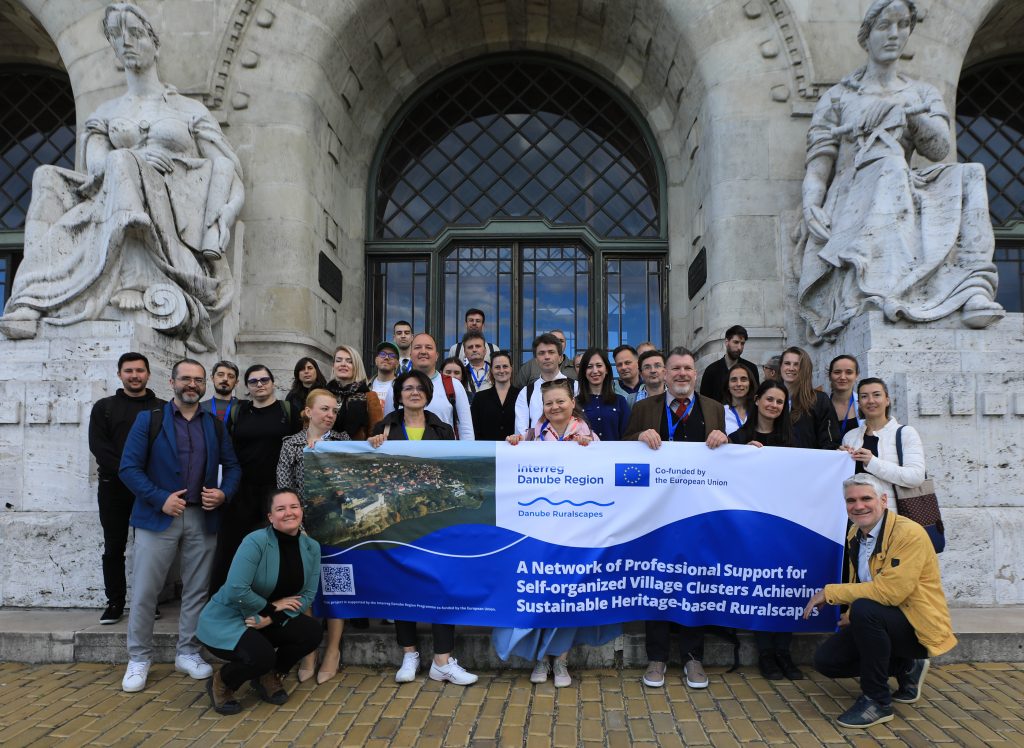
The Danube Ruralscapes project officially launched in Budapest between 28–30 May 2025, with enthusiasm and creative energy. The event offered three days of exchange among partners, bringing together experts and institutional representatives to not only start a new Interreg initiative but also strengthen links with a related project, PlaceCRAFT, creating a shared platform for cross-border collaboration.
Supported by the Interreg Danube Region Programme, Danube Ruralscapes aims to revitalize rural environments along the river by linking heritage with sustainable planning and recognizing the identity value of architecture while ensuring inclusive decision-making.
Representatives from six countries and seven pilot regions attended, marking the beginning of a journey to find shared solutions to the rural challenges faced along the Danube. Although united by a common vision, each solution will be shaped together with local people, tailored to each area’s specific needs.
“This project is not only about conservation; it is about giving communities a voice. We are creating tools that allow them to shape their own future, based on their unique character,”
said Dr. Bálint Kádár, representative of the Lead Partner, Budapest University of Technology and Economics.
Highlights of the Launch Event:
- Public workshops on rural identity, traditional materials, sustainable planning, and participatory design
- Presentations from EU programme representatives and academia
- Review of pilot regions to identify differences and shared challenges across the Danube Basin
- Working sessions to initiate action plans, architectural and landscape identity guides, and other expected outputs
- A meeting of the International DANUrB Association to strengthen cooperation and stakeholder engagement
The project builds on a strong foundation established by DANUrB and DANUrB+, which opened the path to transnational collaboration in heritage-based development along the Danube. Now, Danube Ruralscapes continues this legacy with more precise tools aligned with EU environmental, cultural, and territorial policies and a deeper local engagement.
Working in tandem with the PlaceCRAFT project, the initiative forms a powerful alliance for integrated rural revitalization—combining architectural identity, creative transformation of spaces, and community co-design.
Field Visit: Dialogues in the Ipoly Valley
The event concluded with a study visit to the Ipoly Valley, where partners experienced first-hand examples of heritage-based rural innovation—from restored landscapes and sustainable tourism sites to cultural infrastructure rebuilt with local materials.
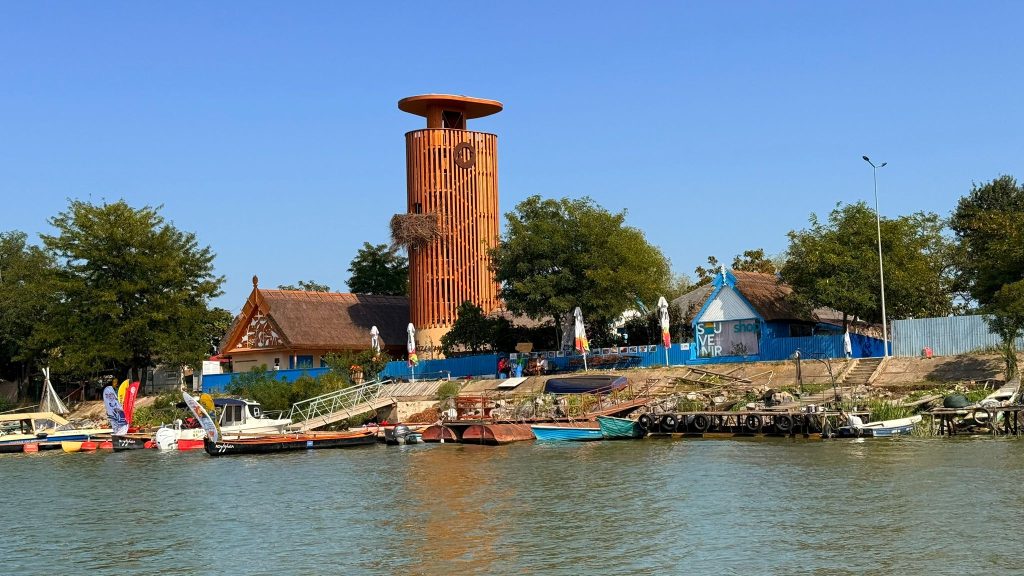
Partner Meeting in the Danube Delta Micro-region – Tulcea, 1–3 September 2025
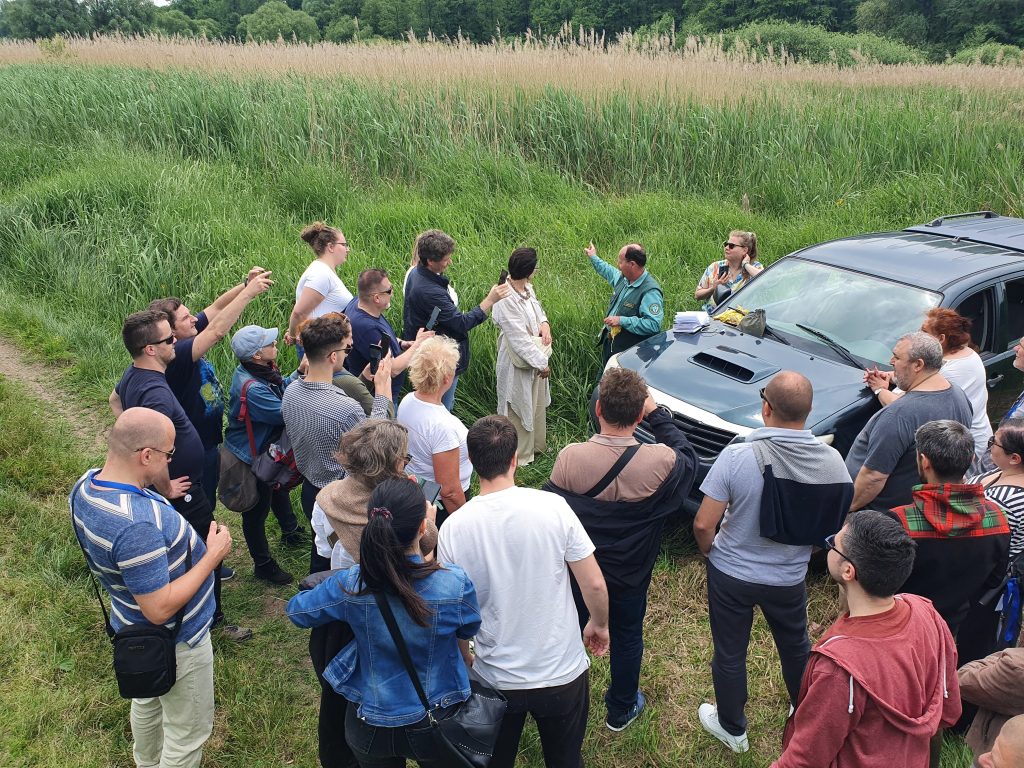
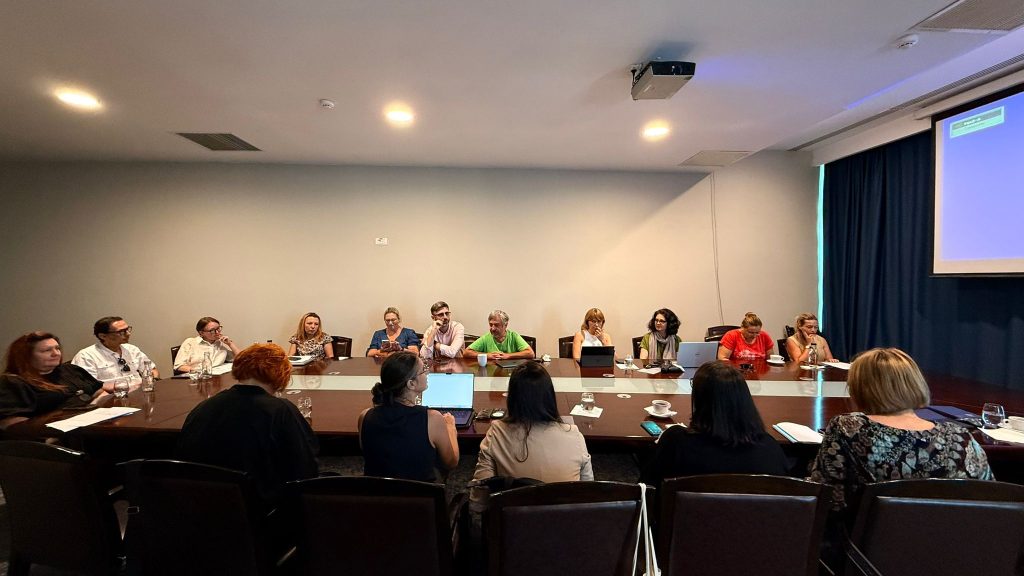
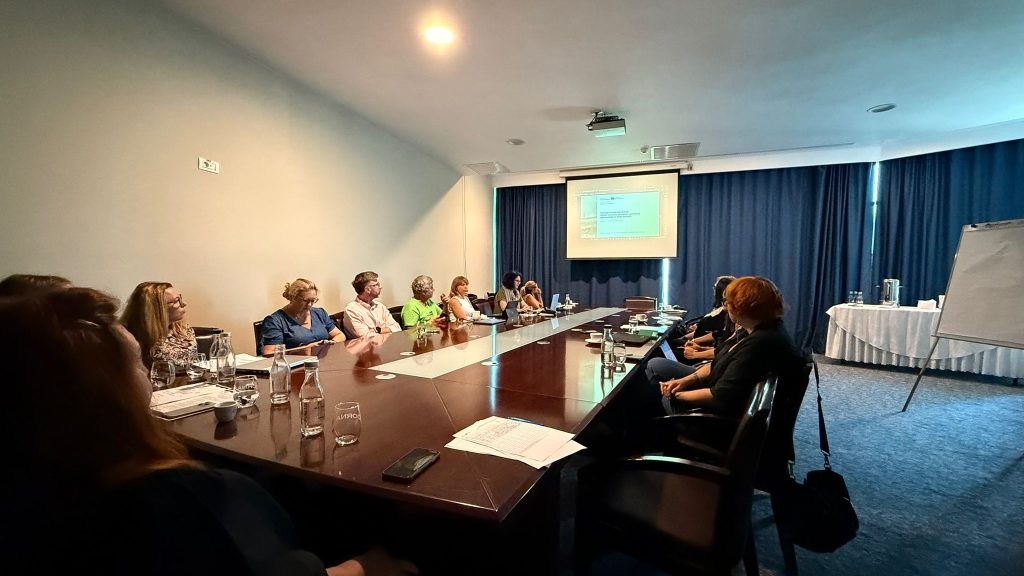
On 2 September 2025, the Romanian Order of Architects, together with project partners Ivan Patzaichin – Mila 23 Association and the “Ion Mincu” University of Architecture and Urban Planning, organized a workshop titled “Danube Rural Landscapes – Common Challenges and Opportunities in the Danube Delta” in Tulcea.
The meeting gathered key local actors, including representatives of Tulcea City Hall and Prefecture, the South-East Regional Development Agency, the Directorate for Culture and Heritage, the Destination Management Organization of Tulcea Municipality, the Danube Delta Sustainable Development Association, the “Gavrilă Simion” Eco-Museum Research Institute of Tulcea, chief architects, OAR Dobrogea branch members, and local architects.
The workshop began with a short project presentation, followed by open discussions and proposal gathering. These focused on shaping the structure of the guides, identifying good practice examples, and addressing key local challenges.
More Information
- Website: https://interreg-danube.eu/projects/danube-ruralscapes
- Facebook: @DanubeUrbanBrand
- Instagram: @danurb_plus
- TikTok: @danube.ruralscape
- X.com: @DRuralscapes
- LinkedIn: @Danube Ruralscapes
- YouTube: @DanubeRuralscapes
Parteneri în România
- “Ion Mincu” University of Architecture and Urban Planning, www.uauim.ro
- Ivan Patzaichin – Mila 23 Association, www.rowmania.ro
- The Romanian Order of Architects, www.oar.archi
- Politehnica University of Timișoara, www.upt.ro
- Mehedinți County Council, www.cjmehedinti.ro