





110 – AF7877 – PLANWERK ARHITECTURĂ ȘI URBANISM SRL


Autori principali: SC PLANWERK ARHITECTURĂ ȘI URBANISM SRL
Co-autor: arh. Cristina Balogh, Arh. Tiberiu Ciolacu, Arh. Diana Cosman, Arh. Vlad Creoșteanu, Arh. Beatrice-Ana Jijian, Dipl. Ing-Arch. Benjamin Kohl, Arh. Cristina Moldovan, Arh. Tudor Pănescu, Arh. Lucian Șuvaina
Colaboratori arhitectură: arh. Ana-Maria Cosma
Colaboratori Specialități: dr. peisagist Păunița Boancă
“ În general, juriul apreciază propunerea prezentată ilustrată echilibrat cu doze pragmatice între obiectivele temei de concurs și interesele părților interesate: public-privat. Conceptul oferă claritate în ceea ce privește spațiile deschise și construite, oferind soluții precise pentru acestea. Există o ierarhie clară a spațiilor care conduce utilizatorii prin străzi și piețe, toate susținute de o combinație de elemente peisagistice propuse și/sau păstrate.
Aceasta este una dintre puținele propuneri care definește foarte clar zona din jurul hangarului 6 pe toate laturile, prezentând în același timp opțiuni structurate de densificare a zonei din proximitatea hangarului. Ca atare, propunerea definește oportunități clare și pentru părțile interesate din sectorul privat în etapele ulterioare, fără a compromite cerințele de bază ale temei și susținând ambiția de a genera un sit unic pentru Brașov și Platforma Rulmentul.
Amestecul funcțional general de pe amplasament este apreciat, însă decizia de a propune funcții publice pe un teren proprietate privată fără o integrare convingătoare a clădirilor existente este lipsită de argumente și întârzie eventualele investiții publice și private, generând nesiguranță. Complexul funcțional din jurul halei și al grădinilor urbane reflectă teme contemporane ale sustenabilității, dar nu are o stringență pentru locația specifică din cadrul sitului și din zona Brașovului.
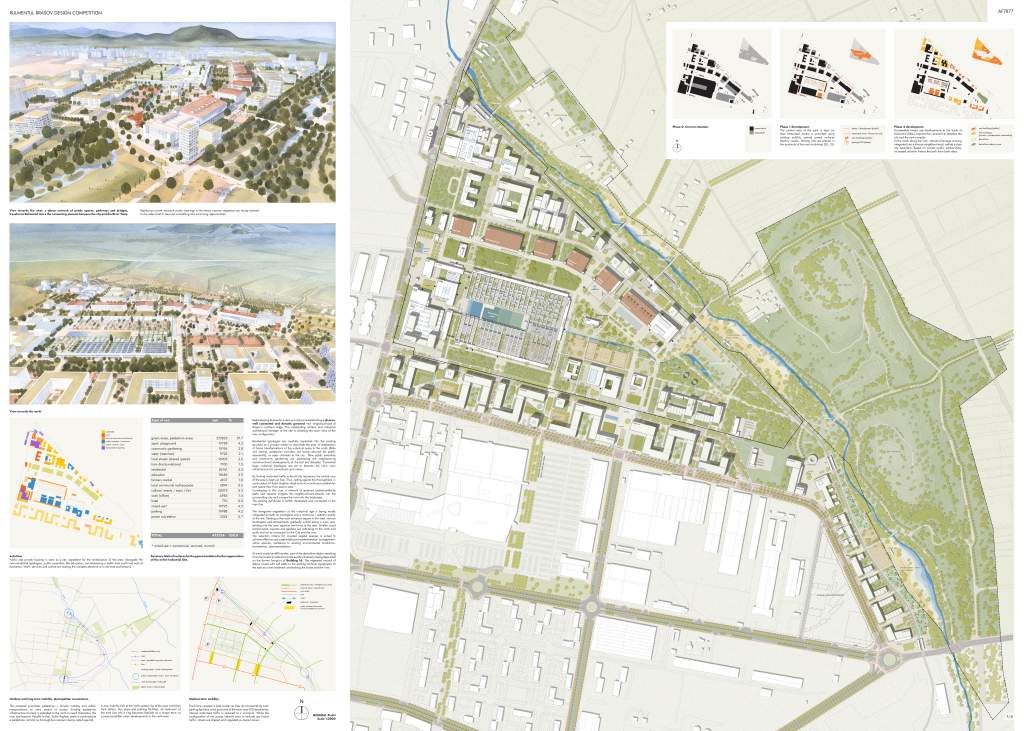
Redeveloping Rulmentul is seen as a chance of establishing a diverse, well connected and densely greened new neighbourhood at Brașov`s northern edge. The outstanding military and industrial architectural heritage of the site is dictating the main lines of the new configuration.
Residential typologies are carefully implanted into the existing structure as a primary means to reanimate the area. Further foreseeable transformations of the industrial areas to the south into residential areas (Bilka) are being considered for the future. New public amenities and community gardening are addressing the neighbouring monofunctional developments of the last two decades. Converted large industrial typologies are set to become the city`s main infrastructure for conventions and culture.
By limiting motorised traffic to the strictly necessary, the central core of the area is kept car free. Thus, opting against the thoroughfare in continuation of Tudor Arghezi street aims at keeping a continuous pedestrian and nature flow from east to west.
Converging at this core, a network of greened pedestrian and bike paths and squares irrigates the neighbourhood, extends into the surrounding city and crosses the river into the landscape.
The existing park & ride is further developed and connected to the tram line.
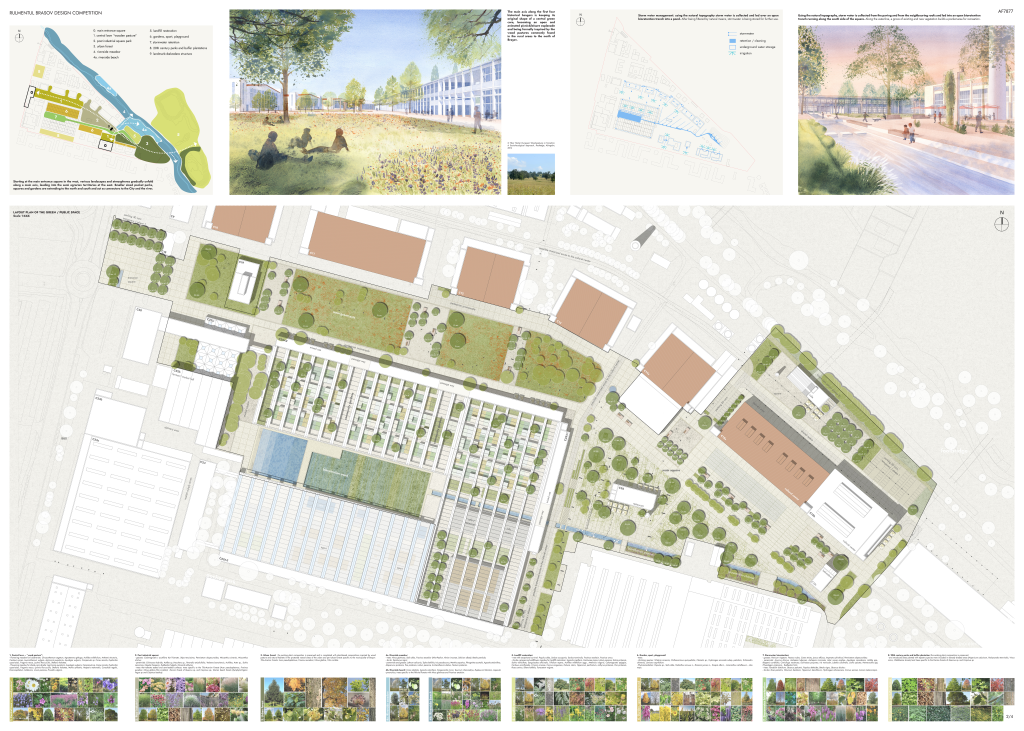
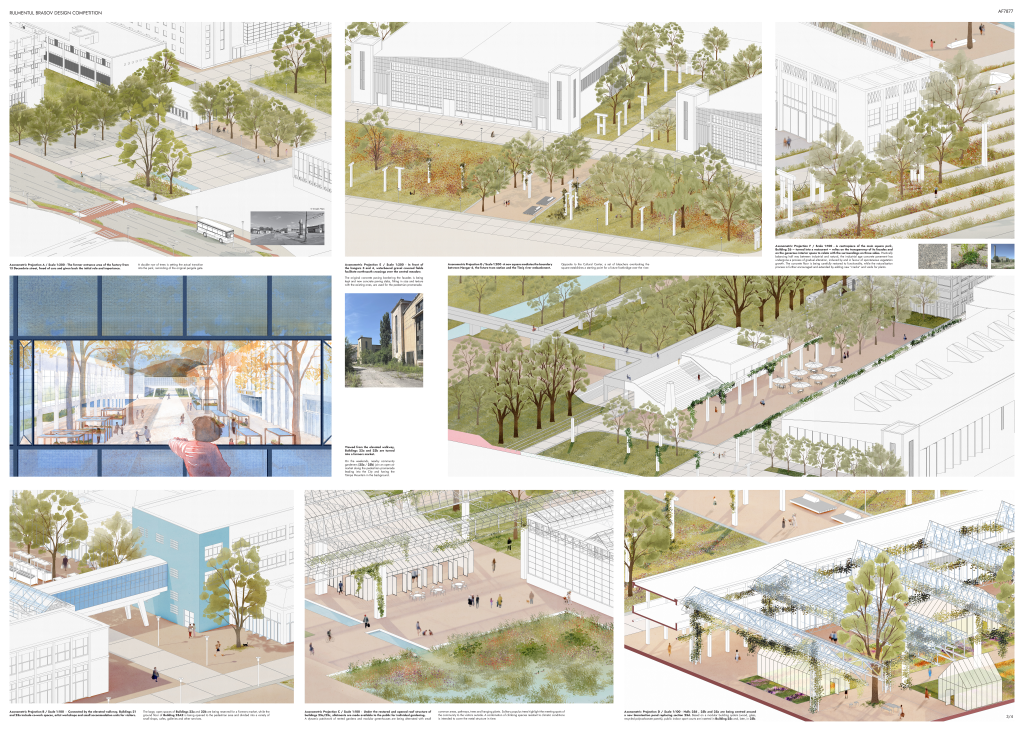
The overgrown vegetation of the industrial age is being mostly integrated as both an ecological and a memorial / aesthetic quality of the site. Starting at the main entrance square in the west, various landscapes and atmospheres gradually unfold along a main axis, leading into the semi agrarian territories at the east. Smaller sized pocket parks, squares and gardens are extending to the north and south and act as connectors to the City and the river.
The selection criteria for inserted vegetal species are aimed to achieve effective and sustainable post-implementation management: native species, resistance to existing environmental conditions, bioretention, phytoremediation.
Poetically balancing halfway between industrial and natural, the industrial age concrete paving has undergone a process of gradual alteration, induced by and in favour of spontaneous vegetation growth. The concrete floor is being carefully restored to functionality, while the naturalisation process is further encouraged and extended by adding new “cracks” and voids for plants.
To avoid costly landfill transfer, part of the demolition debris resulting from the project (crushed concrete and brick stone) is being deposited on the former footprint of Building 16. The vegetated mound of debris mixed with soil adds to the existing artificial topography to the east as a new landmark overlooking the forest and the river.
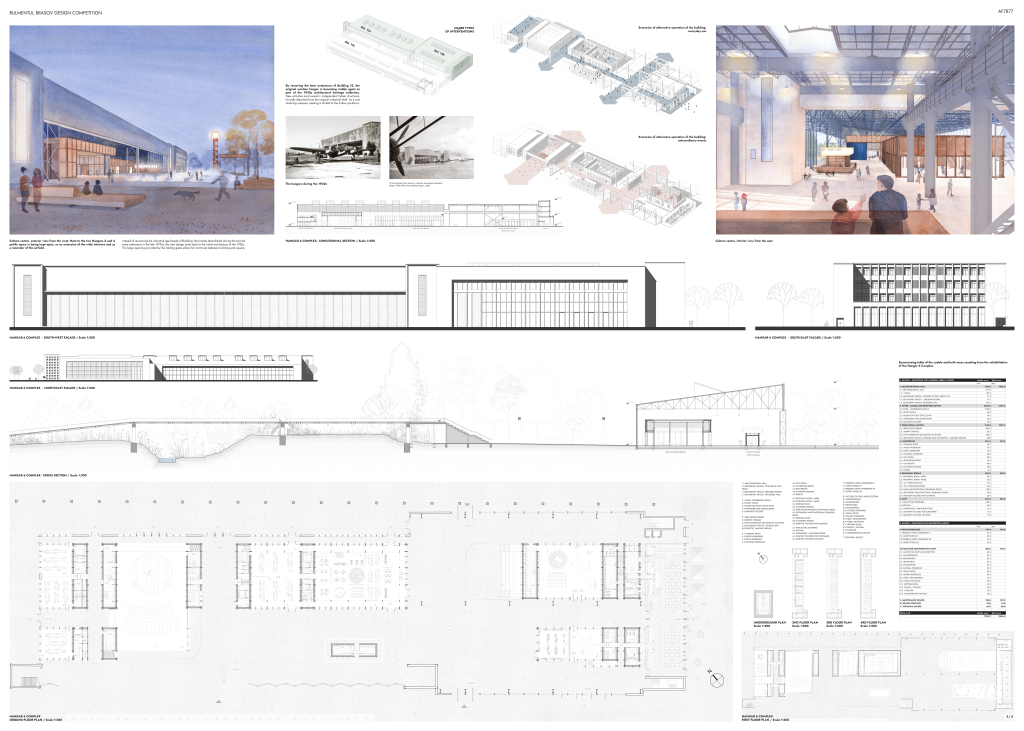
By removing the later extensions of Building 15, the original aviation hangar is becoming visible again as part of the 1930s architectural heritage collection. New activities are housed in independent timber structures, formally detached from the original industrial shell. As a cost reducing measure, heating is limited to the timber pavilions.
Instead of recovering the industrial age façade of Building 16a (mostly demolished during the second wave extensions in the late 1970s), the new design looks back to the initial architecture of the 1930s.The large opening provided by the folding gates unifies building and square.