





118 – WG0924 – KXL STUDIO SRL


Autor principal: Urb. Peis. Iulia-Nicoleta Sabău, arh. Urb. Andrei-Lucian Nistor
Coautori: Isabelle-Elena Tomescu, Florina-Emilia Dincă, Ioana Alexandra Sandu
Colaboratori arhitectură : arh. Andreea Cojocia, arh. Teodor Tibar
Colaboratori specialități: urb. Vlad-Andrei Nour, urb. Luca-Ștefan Șerban
LOT 1 – Locul 10
LOT 2 – Locul 12
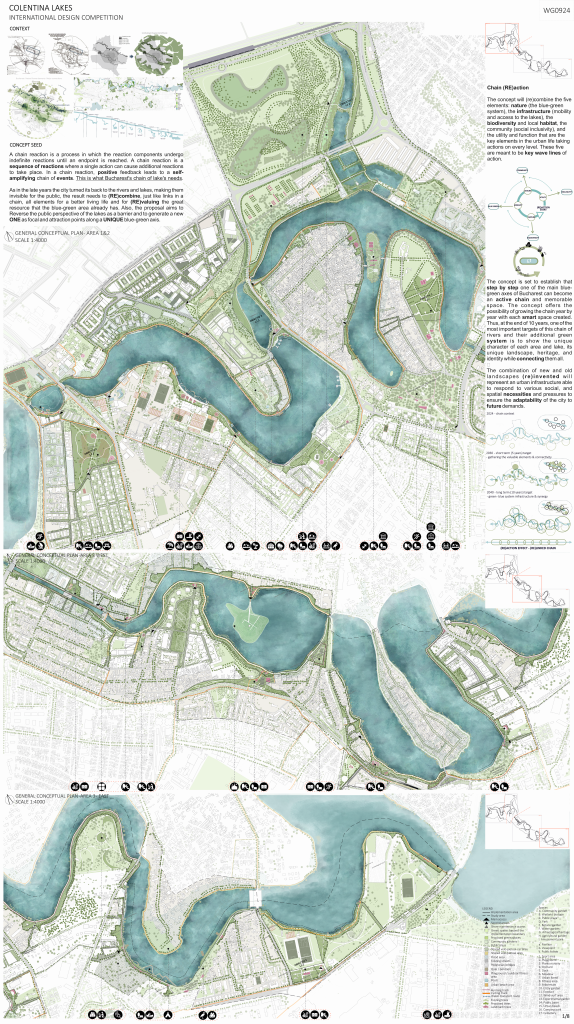
Chain (RE)action
A chain reaction is a process in which the reaction components undergo indefinite reactions until an endpoint is reached. A chain reaction is a sequence of reactions where a single action can cause additional reactions to take place. In a chain reaction, positive feedback leads to a self-amplifying chain of events. This is what Bucharest’s chain of lake’s needs.
As in the late years the city turned its back to the rivers and lakes, making them invisible for the public, the result needs to (RE)combine, just like links in a chain, all elements for a better living life and for (RE)valuing the great resource that the blue-green area already has. Also, the proposal aims to Reverse the public perspective of the lakes as a barrier and to generate a new ONE as focal and attraction points along a UNIQUE blue-green axis.
The concept will (re)combine the five elements: nature (the blue-green system), the infrastructure (mobility and access to the lakes), the biodiversity and local habitat, the community (social inclusivity), and the utility and function that are the key elements in the urban life taking actions on every level. These five are meant to be key wave lines of action.
The concept is set to establish that step by step one of the main blue-green axes of Bucharest can become an active chain and memorable space. The concept offers the possibility of growing the chain year by year with each smart space created. Thus, at the end of 10 years, one of the most important targets of this chain of rivers and their additional green system is to show the unique character of each area and lake, its unique landscape, heritage, and identity while connecting them all.
The combination of new and old landscapes (re)invented will represent an urban infrastructure able to respond to various social, and spatial necessities and pressures to ensure the adaptability of the city to future demands.
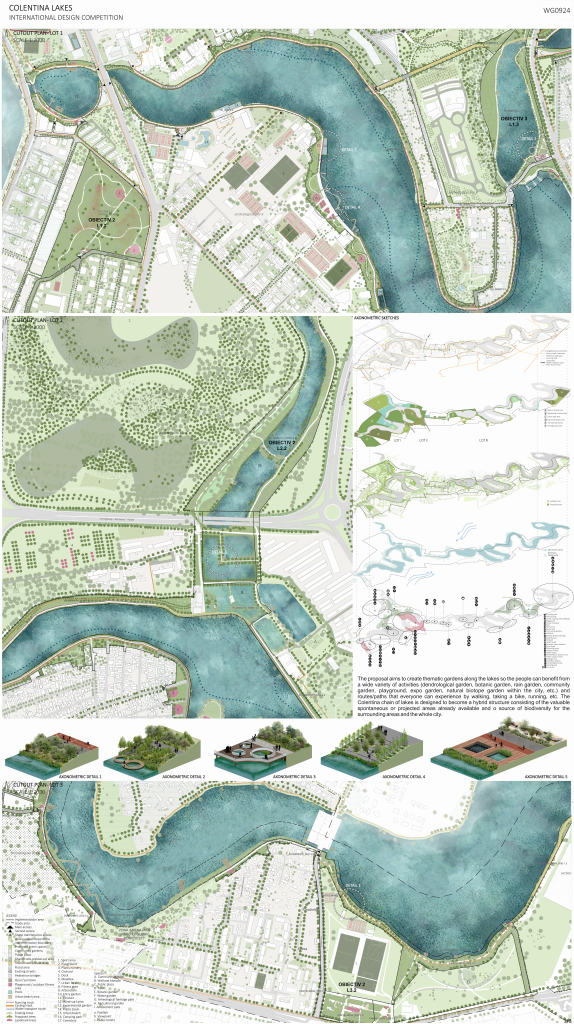
The proposal aims to create thematic gardens along the lakes so the people can benefit from a wide variety of activities (dendrological garden, botanic garden, rain garden, community garden, playground, expo garden, natural biotope garden within the city, etc.) and routes/paths that everyone can experience by walking, taking a bike, running, etc. The Colentina chain of lakes is designed to become a hybrid structure consisting of the valuable spontaneous or projected areas already available and o source of biodiversity for the surrounding areas and the whole city.
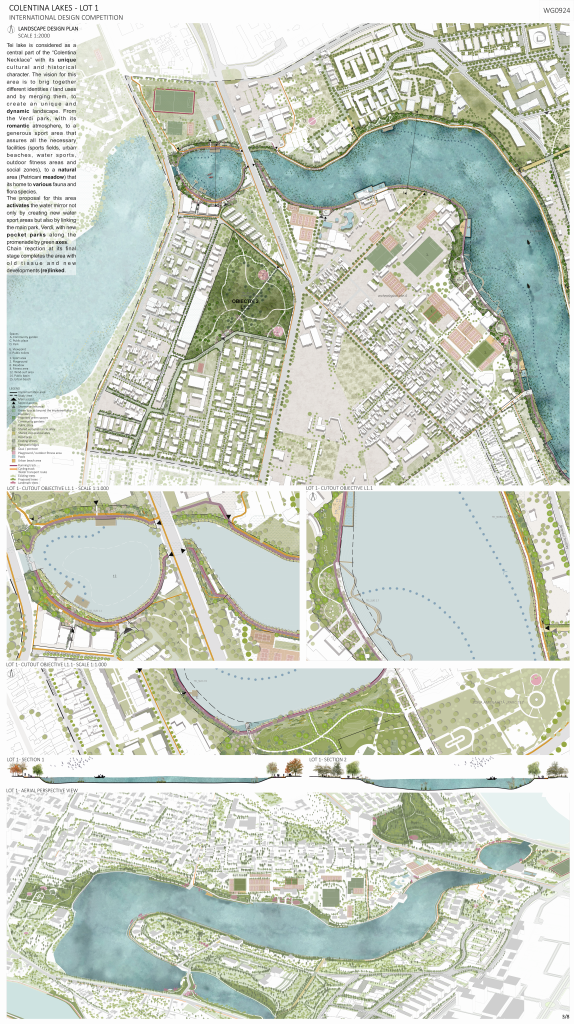
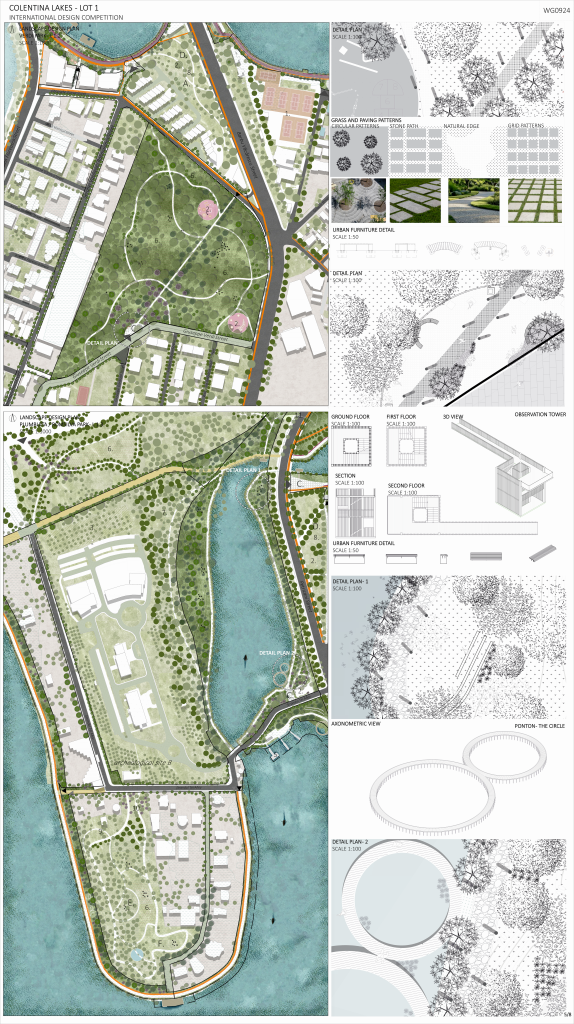
LOT 1
Tei lake is considered as a central part of the “Colentina Necklace” with its unique cultural and historical character. The vision for this area is to brig together different identities / land uses and by merging them, to create an unique and dynamic landscape. From the Verdi park, with its romantic atmosphere, to a generous sport area that assures all the necessary facilities (sports fields, urban beaches, water sports, outdoor fitness areas and social zones), to a natural area (Petricani meadow) that its home to various fauna and flora species.
The proposal for this area activates the water mirror not only by creating new water sport areas but also by linking the main park, Verdi, with new pocket parks along the promenade by green axes.
Chain reaction at its final stage completes the area with old tissue and new developments (re)linked.
LOT 2
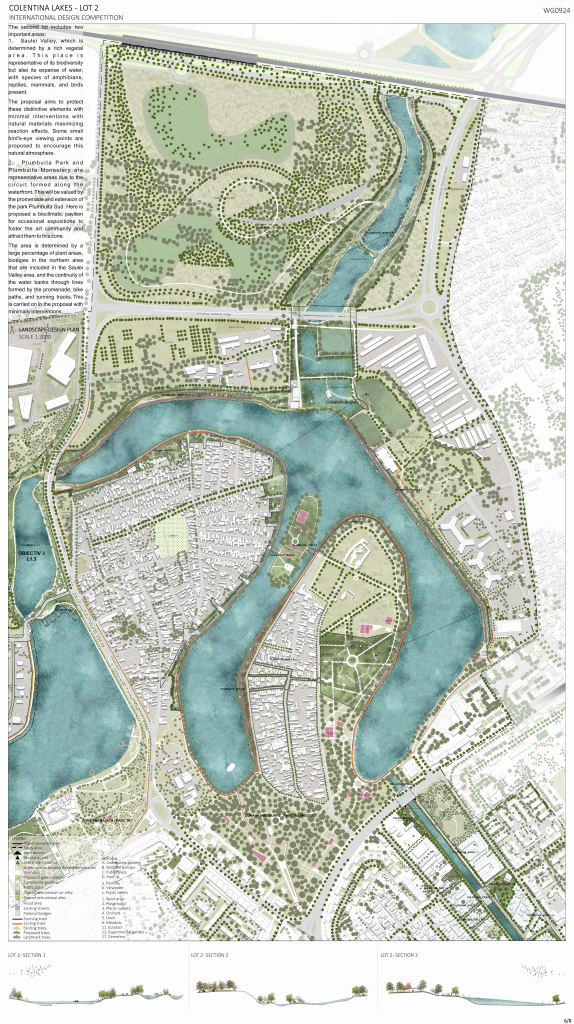
The second lot includes two important areas:
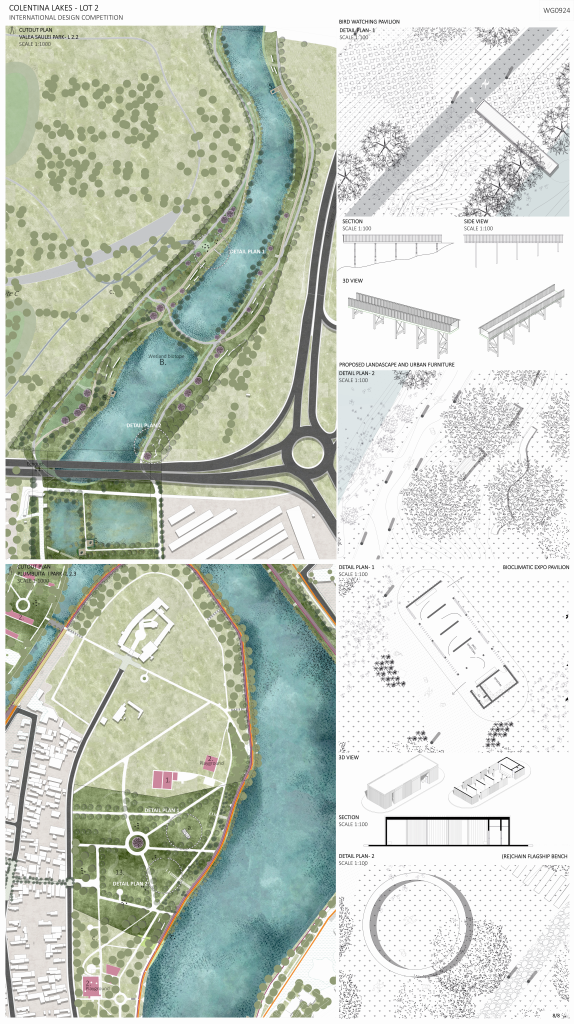
1. Saulei Valley, which is determined by a rich vegetal area. This place is representative of its biodiversity but also its expanse of water, with species of amphibians, reptiles, mammals, and birds present.
The proposal aims to protect these distinctive elements with minimal interventions with natural materials maximizing reaction effects. Some small bird’s-eye viewing points are proposed to encourage this natural atmosphere.
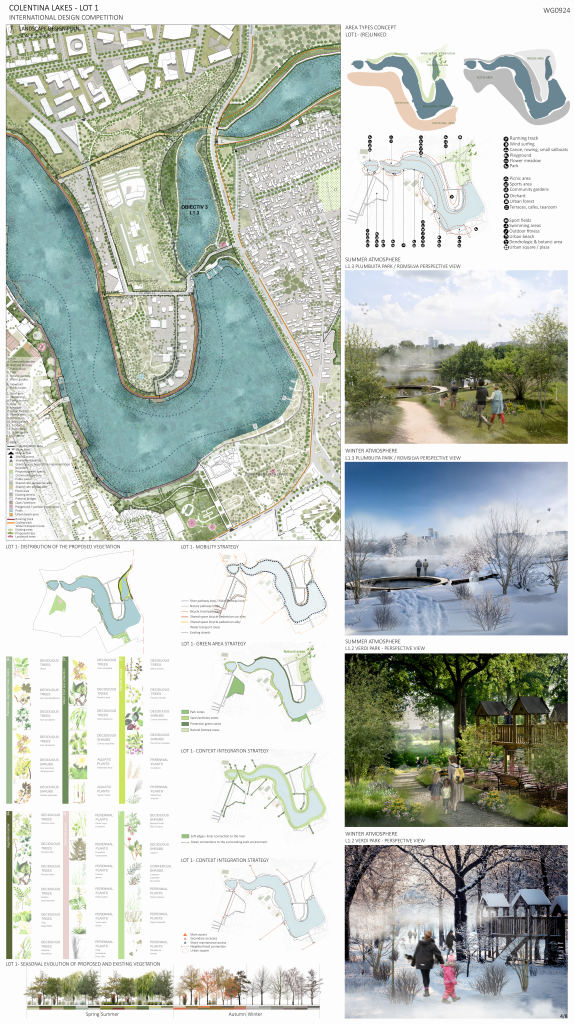
2. Plumbuita Park and Plumbuita Monastery are representative areas due to the circuit formed along the waterfront. This will be valued by the promenade and extension of the park Plumbuita Sud. Here is proposed a bioclimatic pavilion for occasional expositions to foster the art community and attract them to this zone.
The area is determined by a large percentage of plant areas, biotopes in the northern area that are included in the Saulei Valley area, and the continuity of the water banks through lines formed by the promenade, bike paths, and running tracks. This is carried on in the proposal with minimally interventions.
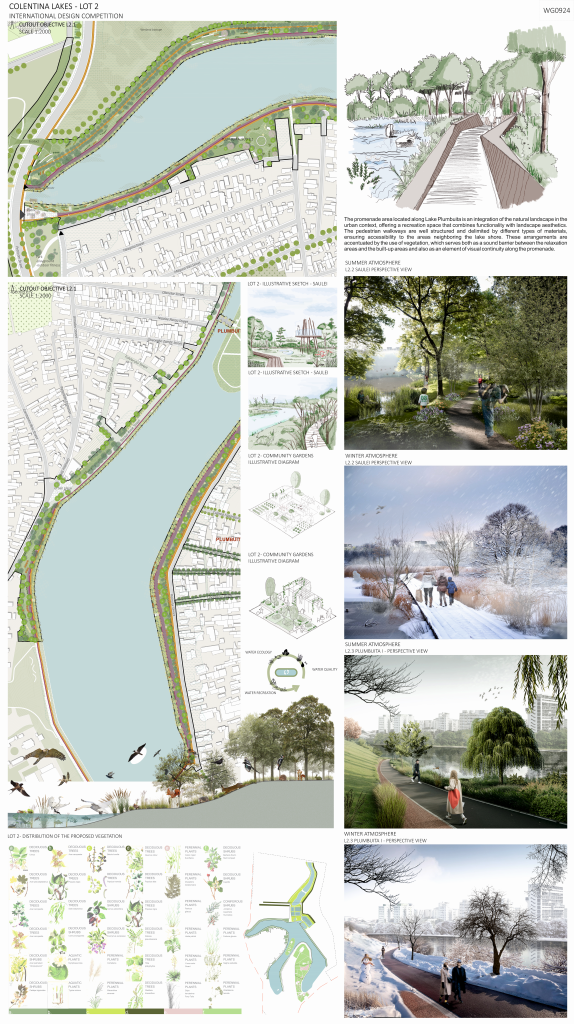
The promenade area located along Lake Plumbuita is an integration of the natural landscape in the urban context, offering a recreation space that combines functionality with landscape aesthetics. The pedestrian walkways are well structured and delimited by different types of materials, ensuring accessibility to the areas neighboring the lake shore. These arrangements are accentuated by the use of vegetation, which serves both as a sound barrier between the relaxation areas and the built-up areas and also as an element of visual continuity along the promenade.