





110 – AM1845 – ATELIER MENOU SRL, SFERA ARHITECTURA SRL


Autor principal / Main Author: arh. Moldovan Miruna, arh. Bucin Adrian-Ovidiu, arh. Sabău Alexandru, arh. Sabău Ioana-Andreea, arh. Simedru Patricia Sabina, peis. Buz Alexandra-Mara
Colaboratori arhitectură / Architectural collaborators: arh. Ciubotariu Cosmin, stud. arh. Dâscă Sabrina-Ioana, arh. Sabou Iulia Lorena
„Acest proiect este recunoscut cu o mențiune de onoare pentru viziunea sa sensibilă și profundă. Principalul obiectiv ale propunerii este umanizarea spațiilor vaste și rigide din perioada socialistă prin crearea unui bogat mozaic de straturi istorice și ecologice. Proiectul propune cu succes o nouă matrice spațială și funcțională care vizează redobândirea scării umane prin introducerea unor spații mai intime și mai diverse, prin schimbări subtile în topografie și o strategie peisagistică nuanțată.” – aprecierea Juriului
Polis Helodes, the city in the marshland: rewriting socialist spaces by restoring human scale and natural ecosystems through a lacustrine green matrix.
Recovering human scale & topography: the project explores a rewriting of the monumental scale of socialist propaganda spaces through multiple tools such as:
- reconfiguring the current neighborhood islands to rank public spaces according to their addressability: (I) public spaces with a catalytic role at the level of the entire city: the studied area of Trei Fântâni – Unirii – Mircea cel Batran becomes the main space of the municipality, connecting with the Ivan Patzaichin waterfront; (II) residential precincts with small-scale and intimate public spaces (basketball court, community gardens, dog parks, play and dining areas and so on);
- searching for spatial intimacy inspired by the oriental slums: new micro public spaces hidden in islands of vegetation; residual spaces become new surprise spaces in the vision area – intersections, widenings, corners, gardens – all offered back to humans and nature;
- reorganizing the circulations: main arteries with fewer lanes, but with side parking lots shaded by mature trees and bike lanes; residential areas with controlled traffic, kept below 30 km/h, or shared-spaces for both cars and bikes or that only allow technical, maintenance or emergency access to the main public spaces; Babadag Street does not lose its status as a main artery, but it receives less traffic, prioritizing bicycle traffic and bus routes. Thus a new important route is formed that surrounds the new city center: Mihail Kogalniceanu – Dobrogeanu Gherea – Păcii streets, then reaching Isaccei Street.
- bringing back Tulcea’s green space and topography as central points in the new identity;
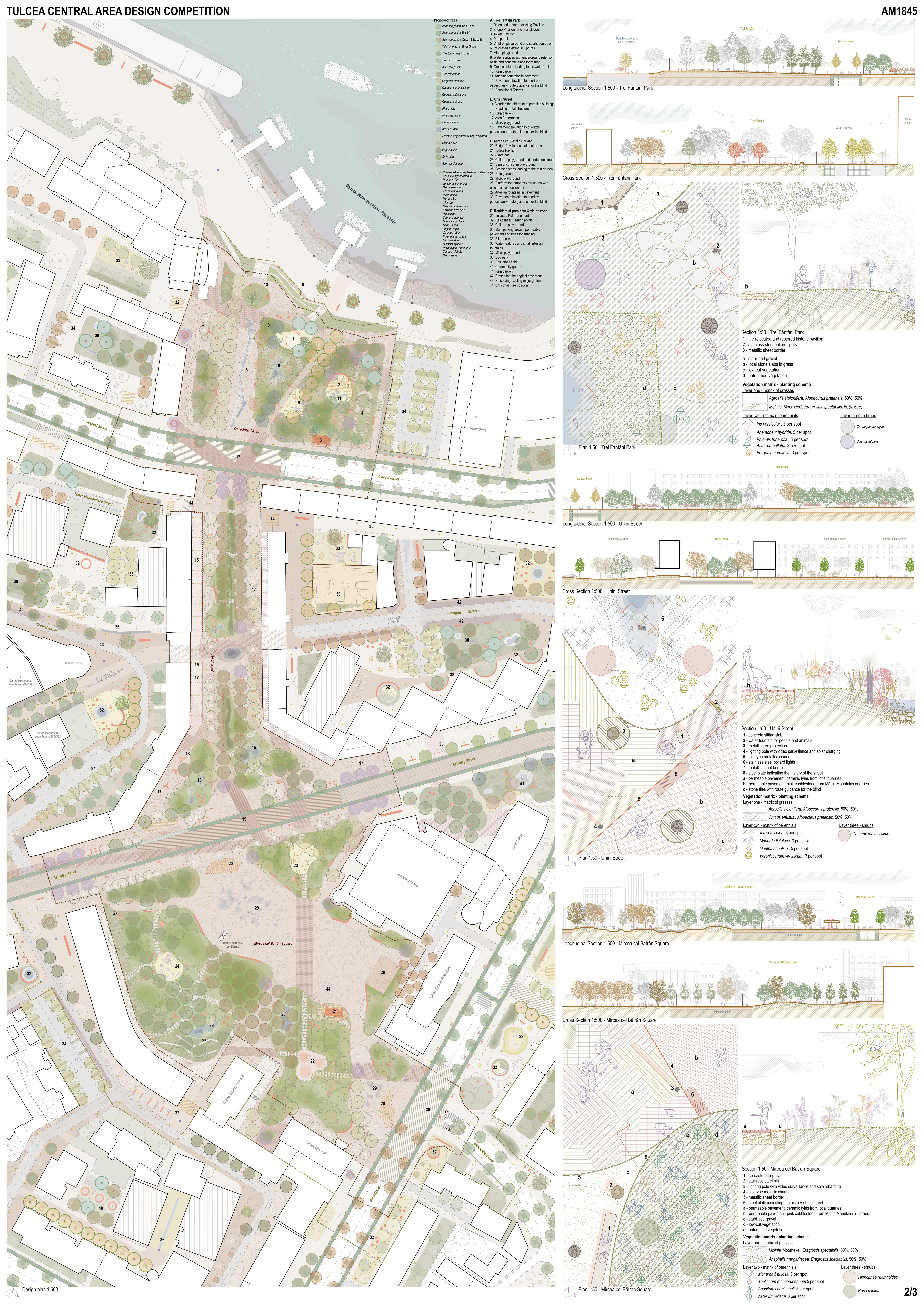
The new (old) identity: a lacustrine green matrix
- new urban and ecological landmarks having roots in the natural and multicultural layers of Tulcea: wetlands and swamps, oriental slums and turkish bazaars;
- however, the new free lines and topographic forms work with both existing spatial typologies and extinct urban fabrics;
- the architectural objects become turning points in the ecological corridor;
- two totem poles (which become hotels for insects and birds) announce and connect the proposed public space with the waterfront;
Functional diversity: the current deserted and monofunctional public area has been rewritten through a functional diversity that addresses all categories of city users:
- children’s playgrounds designed by age groups;
- skatepark and pumptrack: urban sports for teenagers;
- minimal sports equipment for all age groups;
- chess pavilion and resting places suitable for the youth and for the elderly;
- a large area cleared for city-wide events with a dedicated platform on which various temporary structures can be set up: Christmas markets, concerts, demonstrations;
- shaded areas for terraces on Unirii Street;
- green amphitheaters both in Mircea cel Batran Square and towards the waterfront;
- varied typologies of green spaces that attract local fauna and flora;
- new permeable parking areas shaded by mature trees – both along the streets and in key points of residential and tourist areas;
Main node in a restored ecological corridor: the study area is a fundamental node in the green-blue network which connects all the green areas surrounding Tulcea with the Danube Delta. All proposed development is subordinated to the area’s role as an ecological corridor:
- Bridge pavilions with green roof, bird and insect houses, pet fountains, artificial canopies complementary to the tree grid;
- cooling Tulcea: the densification of mature vegetation on all traffic arteries and in all public spaces, the usage of water in different forms (wetlands, areas with artesian wells or the controlled formation of water surfaces following precipitation), together with the exclusive use of permeable paving surfaces – lowers the perceived temperature;
- water management: perimetral drains surrounding green areas that direct water towards wetlands with retention and filtration areas, retention basins under the main paved areas storing stormwater for the irrigation system;
- conserving the existing vegetation and enhancing it through the introduction of native species to foster rich urban biodiversity;
- vegetation strategy: the natural landscape around Tulcea features a balanced mix of aquatic, terrestrial, and human-modified environments, therefore the proposed vegetation concept seeks to replicate these natural habitats within the urban environment;
- the main proposed vegetation categories are adapted to these typologies of spaces and provide the necessary biodiversity to help combat natural pest problems and shelter for local fauna;
- the proposed arrangement of trees in a grid pattern aims to create areas of dense shade; this configuration encourages interspecies competition, stimulating faster growth and thereby accelerating the development of shaded zones.