




118 – MN1994 – IM DESIGN STUDIO SRL


Autori principali: arh. Ioan-Răzvan Molie
Colaboratori arhitectură: Arh. Adrian – Mihai Bumbaru, Arh. Anca Ciubăncan, Arh. Rareș Fundulea, Arh. Matei Năstase, Arh. Mihai Pandele, std. Arh. Selin Asan, std. Arh. Alexandra Moise
Colaboratori specialități: Ec. Teodora – Floriana Badea – Economist
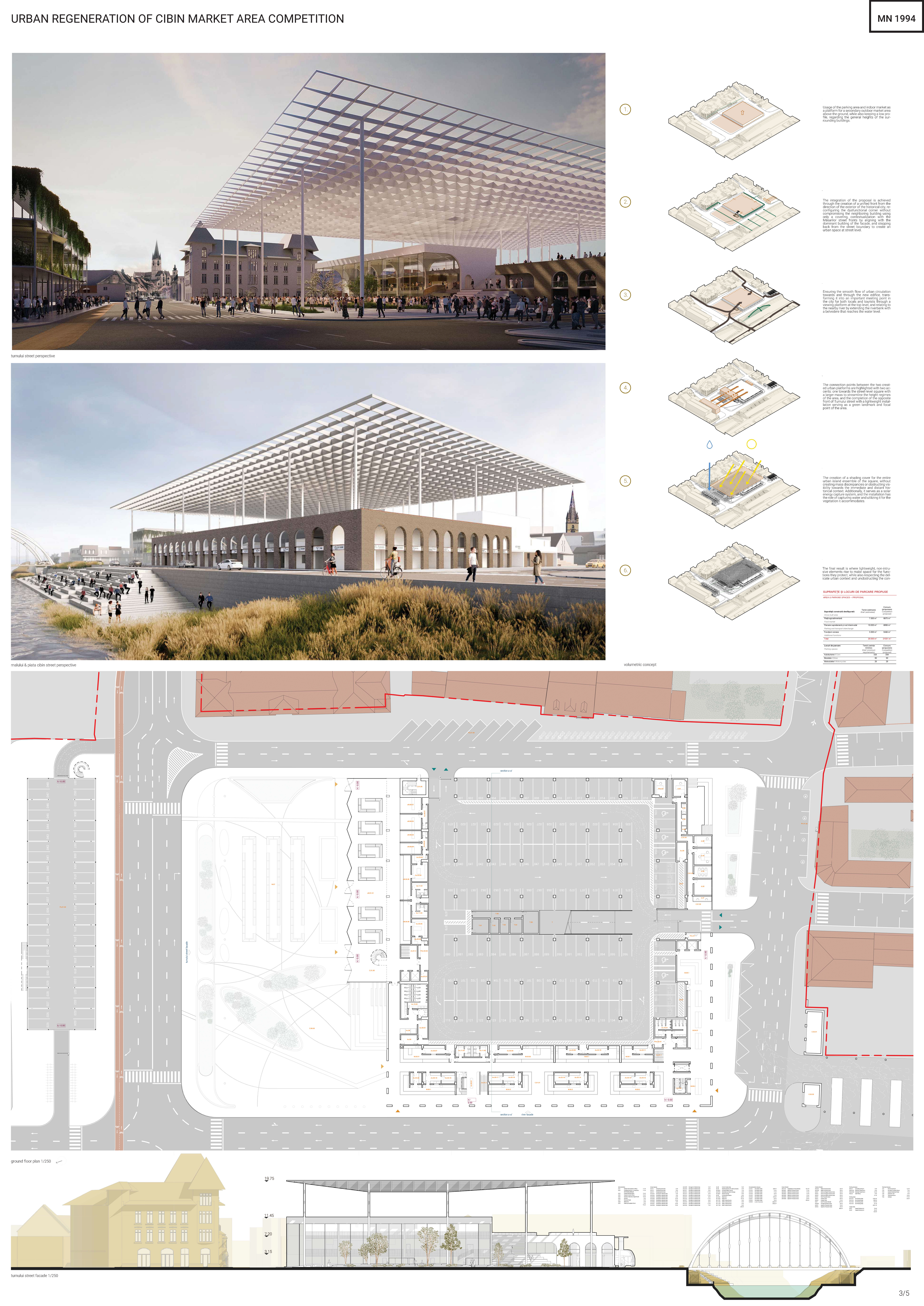
Our proposal for the architectural competition revolves around the design of a dynamic and inclusive public market that acts as a central gathering place, fostering community connections, celebrating local culture, and promoting sustainable practices. Drawing inspiration from the rich history of markets as bustling hubs of activity, our design aims to create a vibrant destination that breathes new life into the heart of the city.
Conceptual Framework: Our vision for the public market is based on four key principles: connectivity, adaptability, sustainability, and cultural enrichment. By seamlessly integrating these elements, we aim to create a space that not only serves as a marketplace but also as a social and cultural catalyst for the surrounding community.
Connectivity: At the core of our design philosophy is the belief that a public market should serve as a connecting force, both physically and socially. Our design includes a network of pedestrian-friendly pathways, inviting locals and visitors to navigate through the market seamlessly. These pathways act as a link between various market areas, encouraging exploration and facilitating interaction between vendors and patrons.
Adaptability: Recognizing the evolving needs of a market, we have designed flexible spaces that can adapt to different functions and events. By incorporating modular structures, movable stalls, and adaptable layouts, the market can easily transform from a bustling market during the day to a venue for cultural events, performances, and community gatherings in the evenings. This versatility ensures that the market remains relevant and engaging throughout the day and across different seasons.
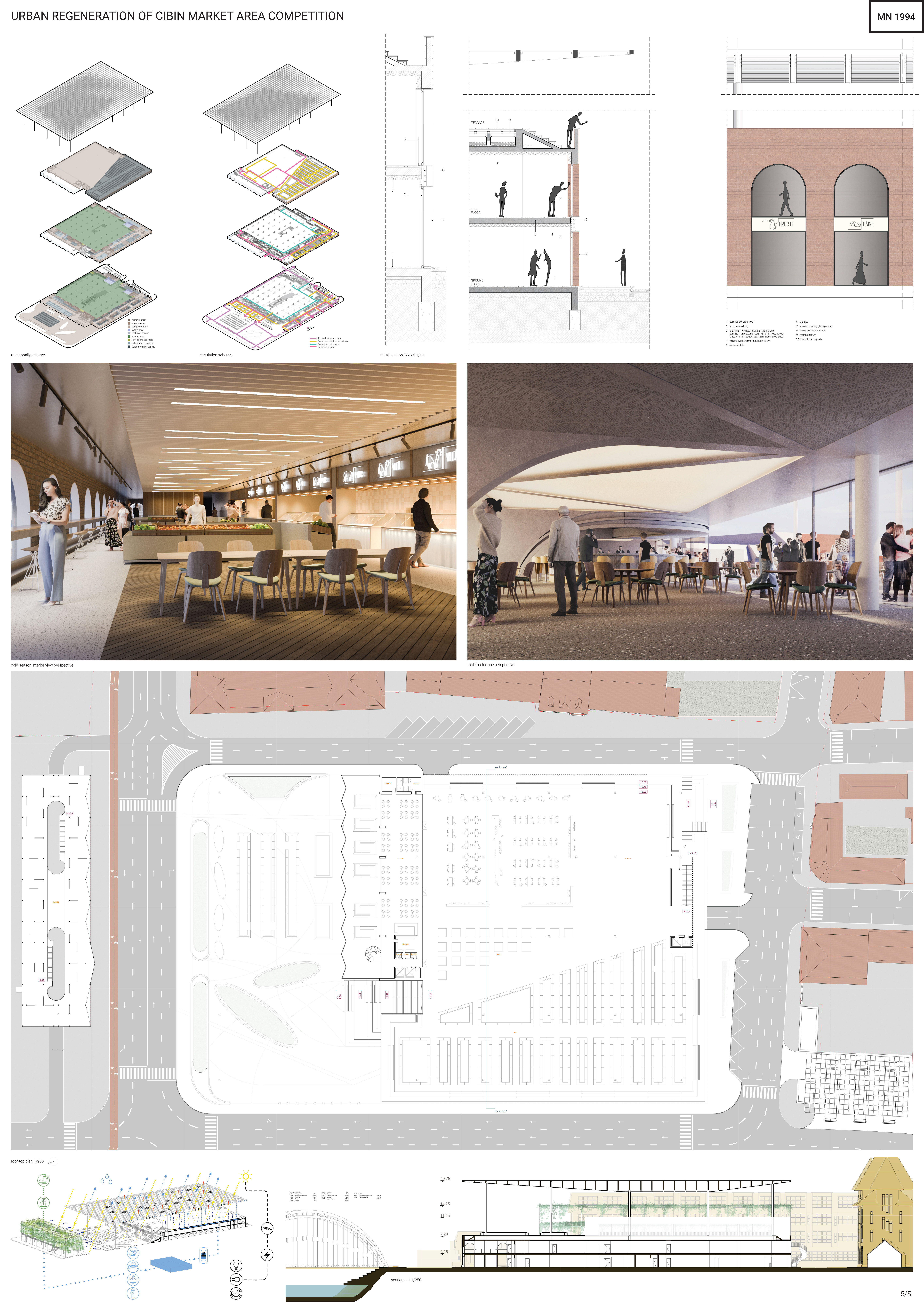
Sustainability: Our design places a strong emphasis on sustainable practices, aiming to minimize the market’s ecological footprint. The market will feature green spaces, rooftop gardens, and vertical farming installations, promoting urban agriculture and providing fresh produce to both vendors and visitors. We will prioritize energy-efficient systems, renewable materials, and waste management strategies, creating an environmentally conscious marketplace that sets an example for the entire community.
Cultural Enrichment: In celebrating the rich heritage and diversity of the local community, the market will serve as a platform for cultural exchange and artistic expression. We envision dedicated spaces for artisans, craftsmen, and artists to showcase their work, promoting local talent and preserving traditional crafts. Additionally, the market will host cultural events, food festivals, and live performances, creating a vibrant tapestry of experiences that reflect the unique character of the region.
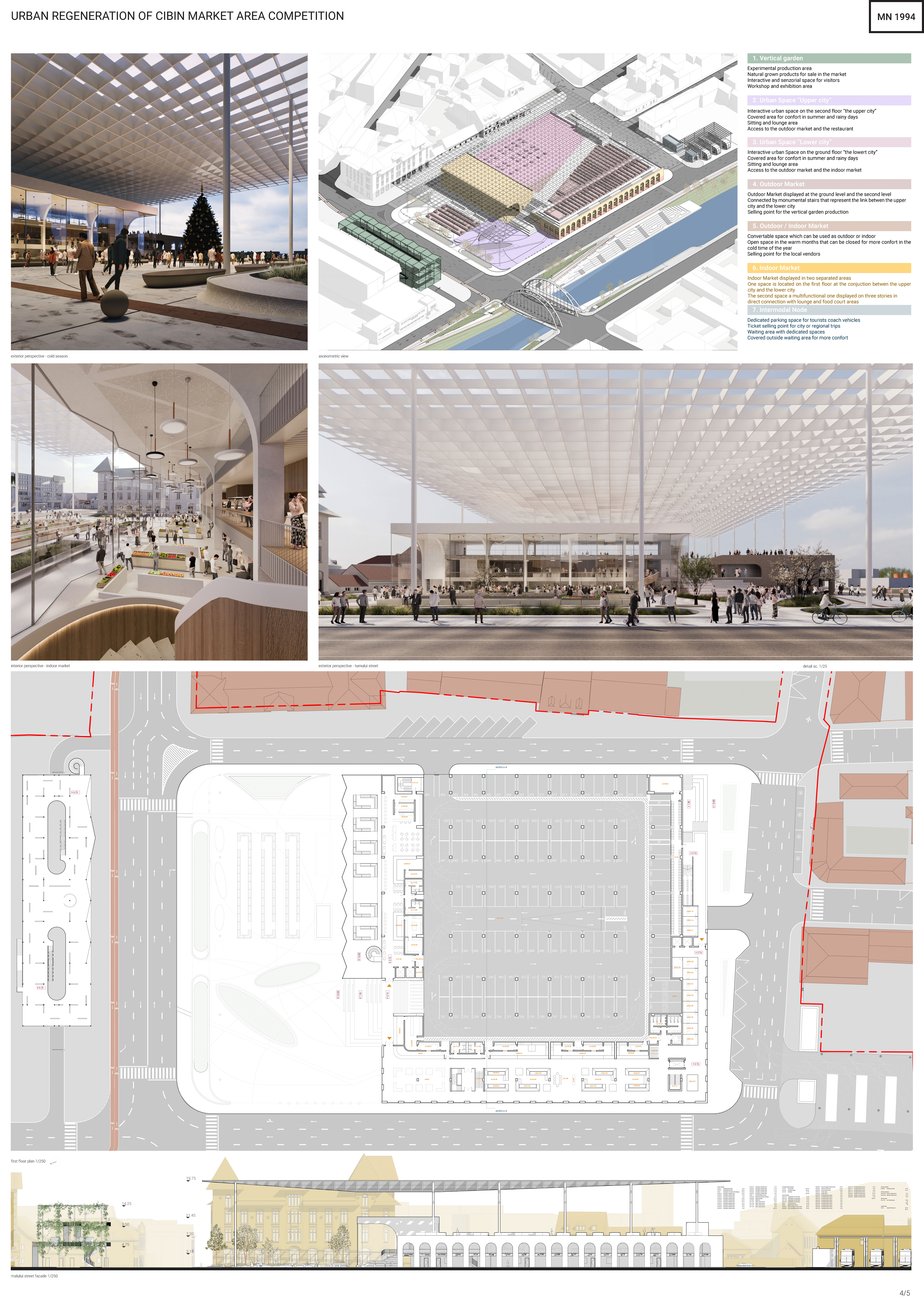
Conclusion: Our architectural proposal for the public market embodies a vision of a vibrant and inclusive space that goes beyond the traditional notion of a market. By integrating connectivity, adaptability, sustainability, and cultural enrichment, we aim to create a dynamic hub that fosters community engagement, celebrates local identity, and supports a thriving local economy. With its innovative design and thoughtful consideration of the needs of both vendors and visitors, our public market will be an iconic destination and a catalyst for positive change in the urban fabric of the city.
At first glance, the medieval spirit of Sibiu is prominently displayed in the city’s atmosphere. The presence of stairs, which connected the daily areas of that period with the major importance areas such as the church, has remained unchanged, although the character of the areas they link has changed. Transforming the natural course of Sibiu into a route with various observation points of the urban area, this concept is found in the current project, where the stairs have a multifunctional role in facilitating the urban experience, and the proposed spaces are traversed along the path of the city’s visual experience.